
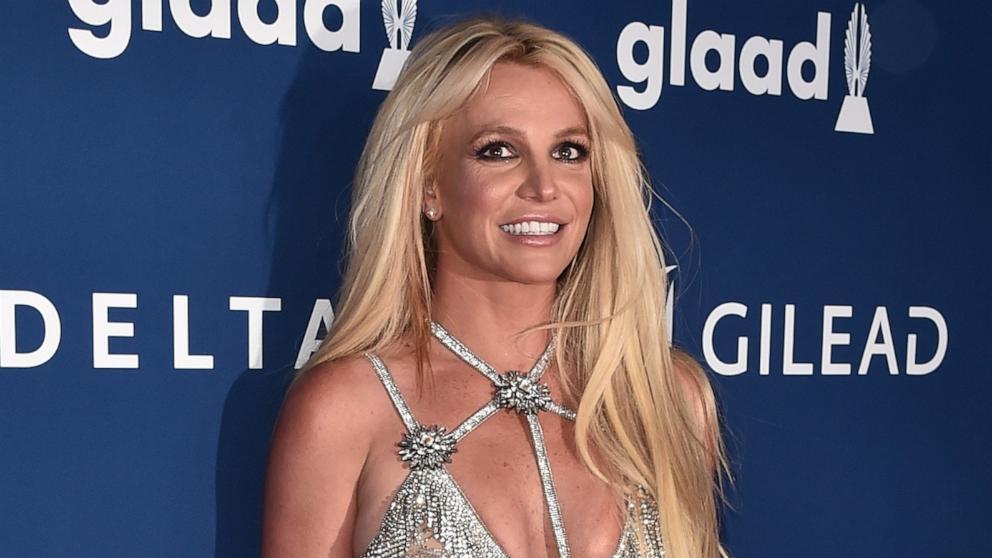
LOS ANGELES, CA—In the weeks since Britney Spears was arrested on suspicion of driving under the influence in Ventura County, California, on March 4, 2026, a familiar narrative has begun to spin in Hollywood circles and tabloid headlines. Her manager, Cade Hudson, issued a statement describing the pop star’s behavior as “completely inexcusable” and confirming that “loved ones” were arranging an “overdue needed plan” to address her well-being. Celebrity physician Dr. Drew Pinsky appeared on TMZ declaring that Spears needed to confront “substance abuse and bipolar disorder”, despite never being treated for any addiction.
To many who have followed Spears’s long and painful journey, however, these developments feel less like genuine concern and more like a calculated campaign to regain control over Spears and her assets. Activists and longtime supporters point to a pattern: public labeling, selective leaks, and provocations designed to position the 44-year-old singer as unstable—all to create the legal and public pretext for a new conservatorship that would once again strip her of control over her life and her multimillion-dollar fortune. This coming after Britney sold her entire cataloge amassing over 20 million dollars.
It's my personal belief that they’re doing this to entice her to react. The more she reacts, the more poorly it reflects on her. We’re watching her being driven into a corner in real time. The goal is to make her crazy enough to where they can regain control of her assets.
It's a horrifying repeat of the 13-year conservatorship that just ended in November of 2021—a legal arrangement Spears has repeatedly described as abusive, exploitative, and traumatic. In her explosive 2021 court testimony, she told a Los Angeles judge she had been “traumatized” and forced to work against her will while under the arrangement. “I just want my life back,” she pleaded. That testimony, combined with her bestselling 2023 memoir The Woman in Me, showed the harrowing reality of financial plunder, emotional cruelty, and physical overreach orchestrated by her own family and the professionals they hired.
The original conservatorship was granted in February 2008 after a series of very public breakdowns. Spears’s father, Jamie Spears, was appointed conservator of both her person and her estate. What followed, according to Spears and court documents, was unmitigated predation. Financially, Jamie Spears and his team siphoned millions from his own daughter’s earnings. He paid himself a handsome salary—reportedly more than $6 million over the years while Spears was forced to beg for spending money, and eat food from a can, despite generating tens of millions through albums, tours, and residencies. Court filings later revealed that the estate, once valued at nearly $60 million, was tightly controlled by Jamie and the professionals he selected. Spears has alleged that money intended for her children or personal use was redirected, and that she was denied basic autonomy over her own finances even as she funded lavish lifestyles for those around her.
Spears has described being isolated from friends, forbidden from dating, and monitored around the clock. Her phone was confiscated. Her social interactions were surveilled. In her memoir, she recounted how her father would berate her, calling her “fat” and criticizing her every move she made while profiting from her image. It was even alleged that he sent paparazzi to snap unflattering photos of her to provide extra, unneeded income for himself. The family dynamic, she wrote, was one of exploitation rather than one of support or even protection. Her mother, Lynne Spears, has at times been portrayed as more sympathetic, yet during the conservatorship years she largely remained silent or complicit in public. Sister Jamie Lynn Spears released a memoir of her own that many fans viewed as self-serving, capitalizing on the family drama while Britney remained legally gagged. Brother Bryan Spears has stayed largely out of the spotlight, but the broader family narrative, according to Britney, was one of collective benefit at her expense.
Perhaps most disturbing were the allegations of physical and medical abuse. Spears has said she was forced to take lithium and other powerful medications that left her feeling “drugged out” and disconnected from reality. In one particularly chilling passage of her memoir, she revealed that a doctor under the conservatorship placed an IUD in her without her full consent, preventing her from having more children despite her expressed desire to expand her family. She claimed she was not allowed to have the device removed when she wanted. These medical decisions, she argued, were made not for her health but to maintain control over her abilities and affairs—a claim supported by her testimony that she was threatened with losing visitation rights to her two sons, Sean Preston and Jayden James, if she did not comply.
The professionals involved—lawyers, managers, doctors, and court-appointed monitors—were often handpicked or approved by Jamie Spears and his legal team. Spears has described a revolving door of experts who appeared more loyal to the conservator than to the conservatee. Court-appointed attorneys initially blocked her attempts to hire independent counsel. Mental-health evaluations were conducted in environments where she felt coerced. Any resistance or emotional outburst from Spears was cited as proof that she needed the restrictions she was fighting against.
When Spears finally won her freedom in 2021 after a global #FreeBritney movement that mobilized fans, celebrities, and legal reformers, it was hailed as a landmark victory against conservatorship abuse. Judge Brenda Penny terminated the arrangement, and Spears publicly celebrated her independence. She released her memoir, performed sporadically, and attempted to rebuild a life on her own terms. Settlements with her father followed, including a 2024 agreement that avoided a potentially explosive trial over legal fees and lingering claims. Jamie Spears has maintained that he always acted in his daughter’s best interests.
Yet the scars remain. Spears has spoken openly about the lasting trauma—anxiety, trust issues, and a deep-seated fear that the system could swallow her again. Her social-media posts, often unfiltered, show us a womin processing profound betrayal by the people who should have protected her. Fans and mental-health advocates note that such behavior is consistent with complex PTSD rather than the “instability” some commentators now rush to diagnose. Britney was never allowed the normal development of a girl to an adult because of her celebrity status, and this was compounded by a conservatorship that severely limited her agency.
Enter the March 2026 DUI arrest. Though details remain limited—no mug shot has been widely circulated, and body-camera footage has not been released, but the narrative quickly shifted from a single incident to a referendum on Spears’s mental state. Dr. Drew’s unsolicited (and unprofessional) diagnosis on TMZ, a gossip site, referencing bipolar disorder and substance abuse, was seized on by tabloids. Some family insiders, according to multiple reports, have quietly expressed “concern” and discussed intervention options reminiscent of the 2008 crisis that led to the original conservatorship. Older reports from late 2025 already hinted at family conversations about her “erratic behavior” and the possibility of legal steps “to protect her from herself.”
To Spears’s defenders, the timing and framing are no coincidence. The same voices that benefited from the first conservatorship or remained silent during its abuses, are once again positioning themselves as her saviors. Labeling Spears with bipolar disorder ignores her own account in The Woman in Me that the diagnosis was weaponized against her; she has described lithium as a chemical restraint. Claims of drug addiction similarly clash with her public statements and the absence of any criminal convictions for substance-related offenses prior to this single DUI stop. These are signs that the people behind the “clear and convincing evidence” are artificially manufacturing her supposed "incapacity" that California law requires to impose a new conservatorship.
Legal experts note that reinstating such an arrangement would be extraordinarily difficult. Spears is no longer a vulnerable 26-year-old in crisis; she is a 44-year-old woman who successfully litigated her own freedom, published a memoir, and maintained a public profile. California conservatorship reform laws passed in the wake of her case have made the process more transparent and protective of individual rights. Yet the machinery of Hollywood, tabloid media, and family influence remains far too influential. A single high-profile incident, amplified by “concerned” experts and selective family leaks, can shift public perception overnight.
Spears has not yet publicly responded in detail to the latest wave of scrutiny, though her social-media activity has been closely watched for signs of distress. Supporters fear that any emotional reaction (anger, defiance, or even silence)—will be twisted as further evidence of instability. The activist commentary that went viral captures the anxiety felt by millions: this is psychological warfare designed to push a survivor back into the cage she escaped.
The stakes could not be higher. At the height of her career, Spears’s estate was worth tens of millions. Even after legal fees and settlements, she retains significant assets from music royalties, merchandising, and past investments. A new conservatorship would once again place those assets under third-party control, potentially by the same family members who profited handsomely the first time. More devastatingly, it would strip her of basic rights: the ability to choose where she lives, whom she sees, whether she works, and how she raises or interacts with her now-adult sons.
Spears’s story has always meant more to the public than celebrity gossip. It became a rallying cry for disability rights, womyn’s autonomy, and reform of a conservatorship system that too often prioritizes control over care. The #FreeBritney movement forced courts and lawmakers to confront uncomfortable truths about how wealth, fame, and family can conspire against an individual. To watch that progress potentially unravel—through a coordinated campaign of provocation and public shaming, feels to many like a betrayal of everything the movement stood for.
Mental-health professionals unaffiliated with Spears’s circle emphasize that trauma survivors often exhibit behaviors that can be misinterpreted. PTSD, complex grief, and the effects of long-term institutionalization can manifest as hypervigilance, emotional volatility, or difficulty trusting authority. Rather than rushing to reimpose legal guardianship, advocates argue, Spears deserves trauma-informed care chosen by her, not imposed upon her.
As the legal and media machinery begins to hum once again, Spears remains at home, reportedly avoiding public appearances. Her team insists a wellness plan is in motion.
Britney Spears fought for more than a decade to reclaim her voice. She documented the abuse in court and in print. She survived a system that treated her as property rather than a person. The question now facing California courts, her family, and the public is whether that hard-won autonomy will be respected — or whether old patterns of exploitation will be allowed to reassert themselves under the guise of “concern.”
What Britney needs is not need another conservator. (And never another "conservator") She needs the world to remember the abuse she endured, to reject recycled narratives of instability, and to let her live — truly live — as the free woman she fought so hard to become. Anything less would not only betray Britney Spears; it would betray the principles of dignity and self-determination her case helped illuminate.